ServicesSolar Repair
Solar Repair in McKinney
When your panels stop producing or the inverter shows a fault, we find the real cause and fix it. We shut the system down properly before touching anything, and we explain what we found in plain words before any repair work starts.
Getting a quiet system producing again
A solar system can look fine from the street and still be producing half of what it should. Most problems come down to a handful of causes: an inverter that has faulted or failed, a connector that has worked loose, wiring chewed by squirrels, or a panel cracked by hail. Finding which one takes testing, not guessing.
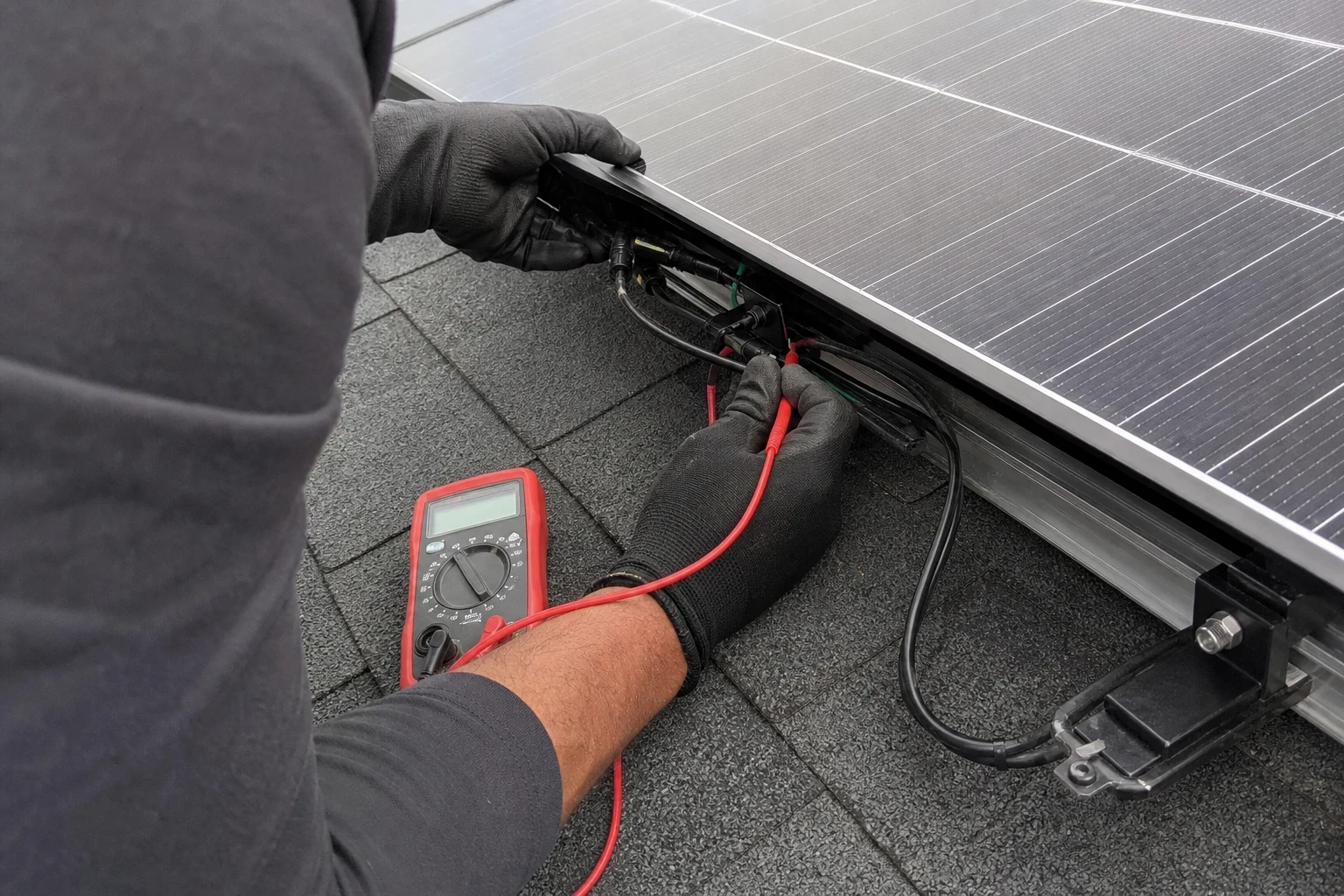
A solar array carries live DC power whenever the sun is up, even with the main breaker off. That is why every repair visit starts with a proper shutdown and a check that the circuits are actually dead. It keeps our crew safe, and it keeps your family and your home safe while we work.
We repair systems we installed and systems other companies put in. If a part is beyond saving, we will say so and walk you through the options.
What a repair visit covers
Monitoring and production review
We start with your monitoring app or inverter readout. Comparing output against what the system should make for the season often points straight to the problem area.
Inverter and optimizer diagnosis
We read fault codes, test string inputs and check microinverters or optimizers panel by panel. A single failed unit can drag down a whole string.
Wiring and connector testing
We look for loose, corroded or melted connectors and damaged conductors under the array. Heat and critter damage show up here more than anywhere else.
Panel inspection for damage
We check for cracked glass, hot spots and backsheet damage. Cracked panels are replaced, since broken glass lets moisture reach the cells.
Critter guard and wire management
Where animals have nested under the panels, we clear the debris, secure loose wiring off the roof surface and fit mesh guards to keep them out.
Photos and a written summary
You get photos of what we found and a written list of what was repaired, so you know exactly what changed on your system.
Signs your system needs a repair
- Production has dropped
- Your monitoring shows lower output than the same month last year, and the panels are not just dusty. A steady drop usually means a failed component, not weather.
- The inverter shows a fault light
- A red or orange light, an error code or a blank screen means the inverter has stopped converting power. Leave it alone and let us test it.
- Monitoring went offline
- Sometimes this is only a Wi-Fi change. Sometimes the inverter has shut down. Either way, it is worth checking before weeks of production are lost.
- Hail or wind left its mark
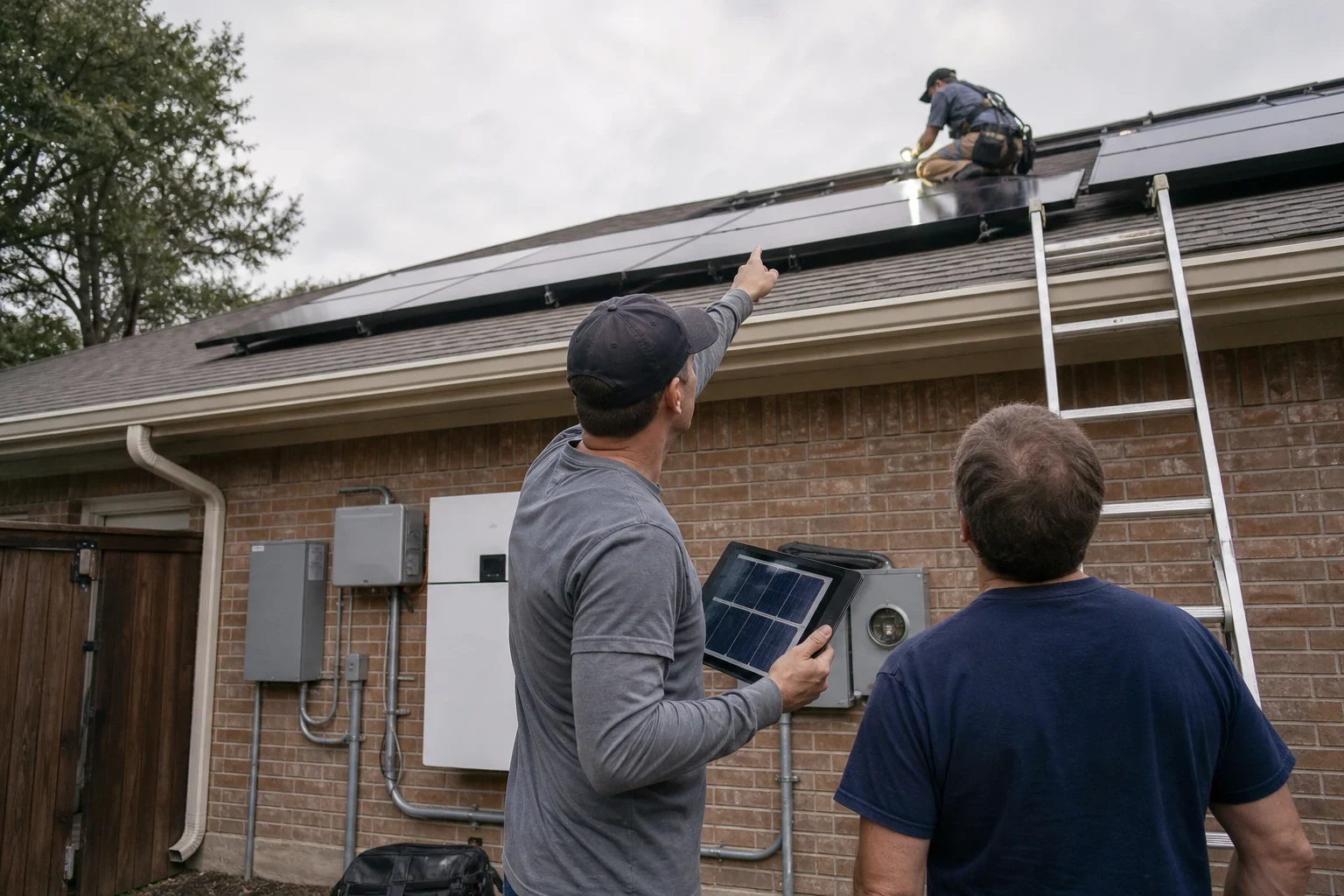
- After a rough storm, take a look at the array from the ground. A broken panel face, a module sitting out of line with its neighbors, or branches lodged beneath the rails all call for a closer look before rain gets in.
- Scratching, nesting or loose wires
- Noise under the panels or wires hanging below the array usually means animals have moved in. Chewed DC wiring is a fire risk and should be fixed promptly.
How a repair visit runs
- 1
A phone conversation first
You tell us what you are seeing: error codes, production numbers, any damage. That helps us bring the right parts and test gear.
- 2
Safe shutdown on arrival
We follow the system's shutdown sequence, then verify with a meter that circuits are de-energized. Ladders are footed and tied off, and we keep kids and pets clear of the work area.
- 3
Testing to find the cause
We test strings, inverters and connections until we can point to the fault. You see the readings and photos, not just our conclusion.
- 4
Your approval, then the repair
We explain the fix and what it involves before we start. Once the repair is done, we restart the system, confirm it is producing and check that monitoring is reporting again.
What affects the cost of a repair
Repair pricing depends on what is wrong and how hard it is to reach. We give you the cost after we have found the cause, so you are not paying for guesses. If replacing an older inverter makes more sense than repairing it, we will lay out both options.
- The failed part
- A loose connector is a small job. A replacement string inverter or several panels is a larger one, and part availability for older equipment varies.
- Roof access and pitch
- Steep roofs, two-story homes and panels in hard-to-reach rows take more time and more safety setup.
- Warranty coverage
- Many panels and inverters carry manufacturer warranties. We check what still applies and help with the claim paperwork, which can lower what you pay.
- Extent of storm or animal damage
- One cracked panel is different from a damaged string with chewed wiring underneath. We show you the full picture so the scope is clear.
Solar repair questions
- Will you work on solar that a different installer put on my home?
- We will. Most mainstream panel, inverter and optimizer brands are familiar to us, no matter which company mounted them. If your original installer has closed up shop or stopped returning calls, that is not a problem for us.
- Is it safe to shut my system off myself?
- You can use the AC disconnect or the rapid shutdown switch if your system has one, and that is a sensible step if you see damage. Do not open the inverter or touch wiring under the panels. The panels still produce DC voltage in daylight.
- Will hail damage be covered by my homeowners insurance?
- Solar panels are often treated as part of the house under a homeowners policy, though policies vary a lot. We take clear photos of each damaged panel and note in writing what we found and where, so your insurer has the details to review. The coverage decision belongs to your adjuster, not to us.
- My panels are fine but production is low. Do I need a repair or a cleaning?
- In North Texas, dust and pollen can cut output noticeably, especially after a long dry stretch. We can tell from testing whether it is a dirt problem or an equipment problem. If it is dirt, our panel cleaning service handles it.
- How long does a typical repair take?
- Many repairs, like replacing a connector or a microinverter, are finished in the same visit as the diagnosis if we have the part. Larger jobs, such as an inverter swap or replacing several panels, may need a second visit once parts arrive.
Let's find out what your system needs
Tell us what the inverter or monitoring app is showing, and we will talk through the likely causes and set up a visit to your home in McKinney or a nearby town such as Allen, Frisco or Prosper.