ServicesRoof-Mounted Solar
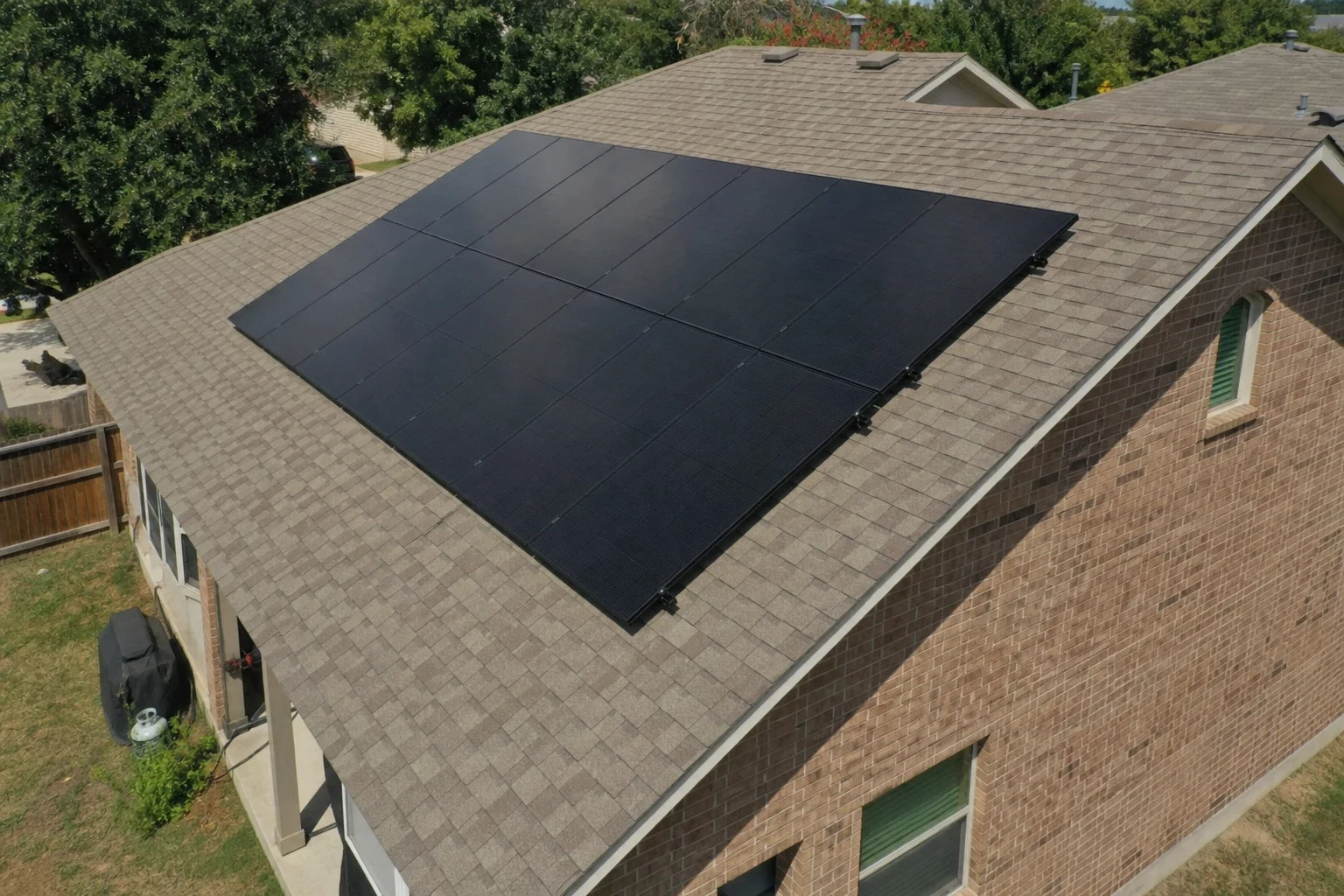
Roof-Mounted Solar in McKinney
We mount solar panels on your roof with care. Every attachment lands on a rafter, every hole is flashed and sealed, and our crew is tied off from the moment we step onto the shingles. You get a system that makes power without putting your roof or your family at risk.
What roof-mounted solar means for your home
Most homes have plenty of usable roof, and putting panels up there keeps your yard open and the wire runs short. The catch is that every mount means drilling into the layer that keeps rain out of your house. So we treat your roof as the heart of the job, not just a surface to bolt hardware onto.
Before any mount goes up, we study your shingles, the decking beneath them and how far apart the rafters sit. When a roof has only a few good years remaining, you hear that from us honestly, and you can have it redone before the panels arrive. Taking an array down later for a re-roof adds cost and downtime that an early, straight conversation avoids.
Hail and long summer heat are part of life around McKinney, so we pick racking and attachments rated for the load and plan panel rows that leave room for water to drain and air to move underneath.
Everything that goes into the install
Roof and attic look
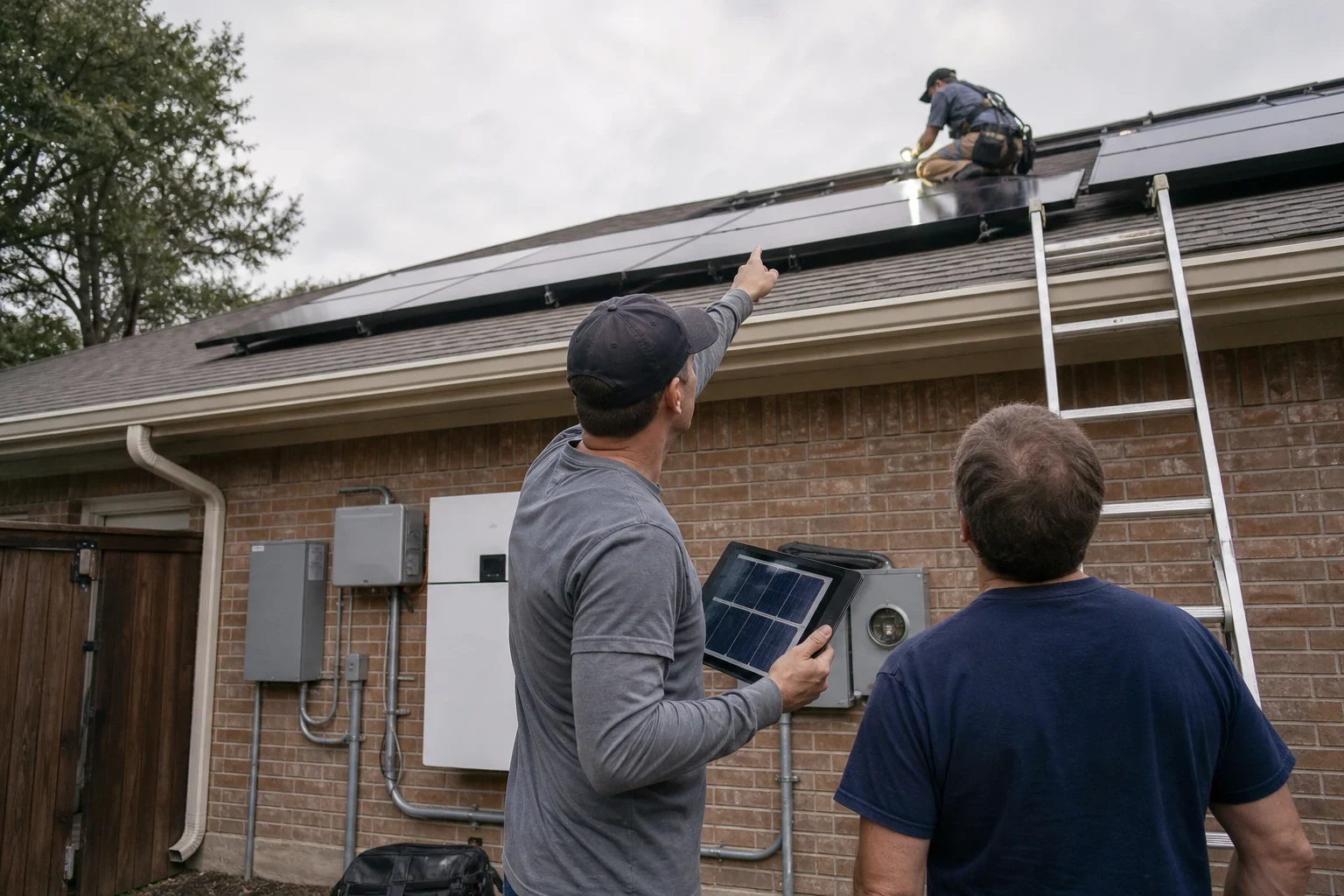
Before design starts, our crew climbs up to check the shingles, then heads into the attic to locate rafters, probe for soft decking and spot old water stains. Photos of each finding come to you.
Flashed, sealed attachments
Every mount is lagged into solid rafter wood rather than thin decking alone. A metal flashing tucks beneath the shingle row above, and sealant fills the hole before the bolt is driven.
Racking and panel layout
Panel rows are planned around the fire setback rules at ridges and edges. Those open strips give firefighters a path and make the roof safer for anyone who climbs up there later.
Wiring and rapid shutdown
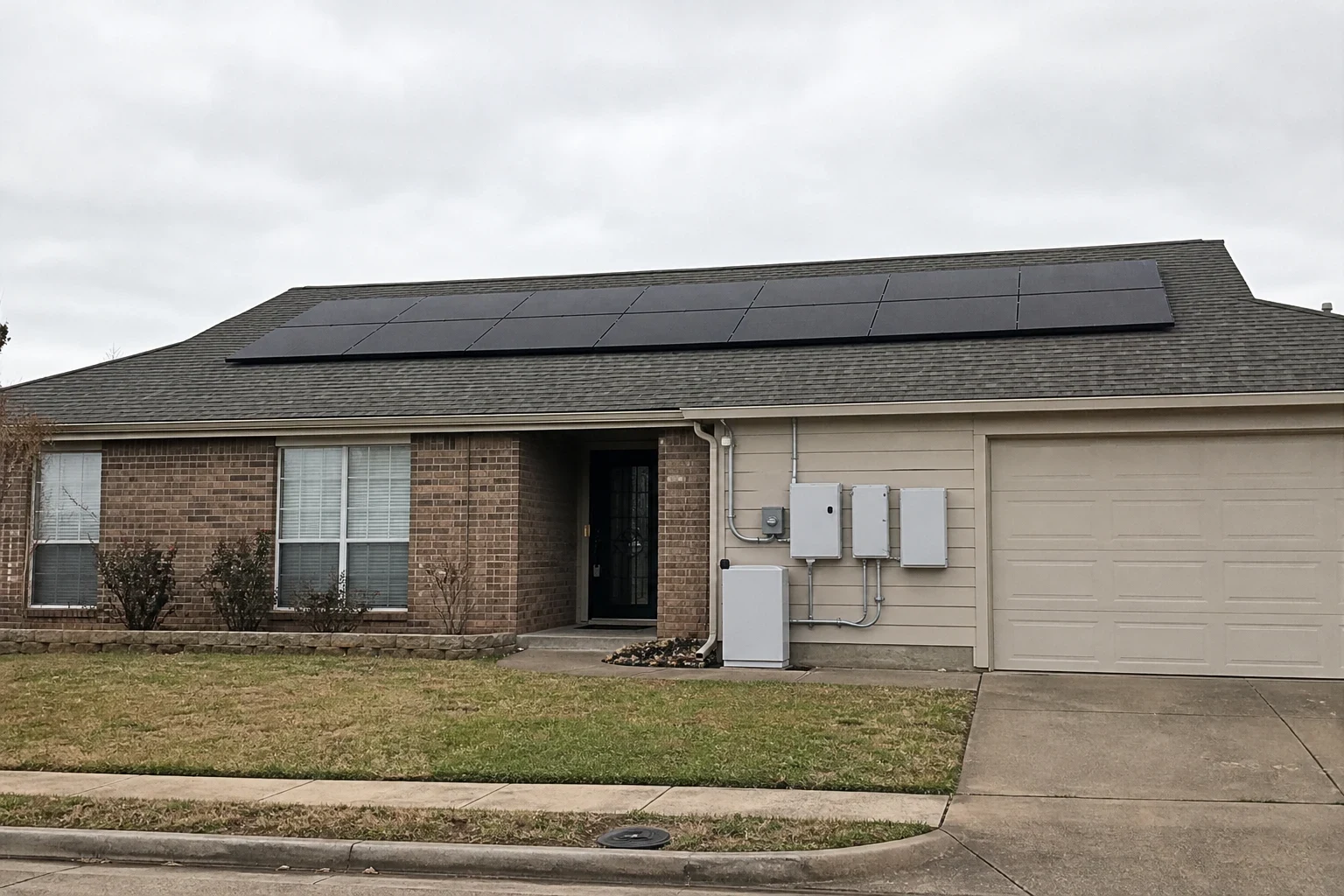
Conduit is run neatly and strapped down along its whole length. Rapid shutdown equipment is part of every system, so panel voltage falls quickly once the system is switched off, in line with current electrical code.
Permit and inspection
Our office files for the city permit, books the inspection and takes care of the utility paperwork, so your system goes live the legal way.
Signs roof-mounted solar is a good fit
- A wide south or west face
- Large roof planes facing south or west catch the most sun during the hours you use the most power.
- A roof with years left
- Shingles in good shape with plenty of life ahead mean the panels can stay put for a long time without coming down for a re-roof.
- Little shade from trees
- Panels lose output in shade. If nearby trees are small or set back, the roof is likely a strong spot.
- Your yard needs to stay open
- If a ground array would eat into play space, a garden or a future pool, the roof keeps that land free.
- High summer bills
- Air conditioning runs hard for months here. A roof system produces most during those same long, sunny afternoons.
What happens, from first call to switch-on
- 1
A call to start
Share a bit about your house, your electric bills and anything on your mind. Then we schedule a time to see the roof in person.
- 2
Visit and system design
We take measurements, look in the attic and photograph what we find. Next comes a design and a written estimate broken out line by line, so every cost is visible.
- 3
Installation
The crew puts up ladders and fall protection, ropes off the ground below and asks that kids and pets stay indoors while we work overhead. Most homes take one to three days, and before leaving we clear screws and debris from the yard and gutters.
- 4
Inspection and turning it on
Once the city inspection passes and the utility signs off on the connection, we start the system and show you how to switch it off safely.
What shapes your estimate
No two roofs price out alike, so your number comes from our visit, not from a chart. The written estimate lists panels, racking, electrical work and permits on separate lines, which keeps late surprises off the bill.
- System size
- More panels mean more racking, more attachments and more labor. We size the system to your actual usage.
- Roof pitch and height
- Steep or two-story roofs take more setup time and more safety gear to work on properly.
- Roof layout
- Several small planes, dormers and vents mean more cutting around obstacles and more attachment points than one big open face.
- Electrical upgrades
- Some older main panels need an upgrade to accept solar safely. We check this during the visit and list it separately if it applies.
Questions about solar on your roof
- Will the holes in my roof cause leaks?
- Not with proper work. We fasten every mount into a rafter and cover it with flashing that tucks under the shingle above, so water sheds past it like anywhere else on the roof. Each hole gets sealed, and we check the attic once we finish.
- What happens if I need a new roof later?
- The panels and racking can be removed and reinstalled, though it adds cost. So we look over your roof carefully up front and tell you if a new roof before the install makes more sense. We don't do roofing ourselves.
- How do panels hold up to hail?
- Most quality panels are tested against hail impact, and their glass is tougher than most people expect. A bad storm can still cause damage, and our solar repair service can check the system afterward.
- Do solar panels put firefighters at risk?
- We design for that. Setback rules keep clear walkways open on the roof, and rapid shutdown equipment drops panel voltage quickly when the system is turned off.
- Can a battery be added down the road?
- Yes. We can set up the wiring now so adding a battery later is simple.
Let us take a careful look at your roof
Give us a call and we will book a visit to inspect the roof, the attic and your electrical panel. Afterward you get a layout drawn for your home and an itemized estimate to review at your own pace.