ServicesSolar Panel Installation
Solar Panel Installation in McKinney
We design and install solar systems that fit your roof, your electrical panel and the way your home uses power. Every step is planned with safety in mind, from how our crew works on the roof to how the system shuts down when the grid goes out.
Solar That Fits Your Home and Is Built to Be Safe
A solar system is a power plant bolted to your house. It makes real voltage, it sits on your roof for decades, and it ties into the same panel that feeds your kitchen and your kids' rooms. We treat it that way. Our installs start with a close look at your roof structure and electrical service, not a sales pitch.
Solar makes the most sense when your roof has good sun exposure, has plenty of life left in it, and you plan to stay in your home for a while. Long, hot summers mean air conditioning runs hard for months, and that is when panels earn their keep. If something about your home makes solar a poor fit, we will tell you plainly.
What Our Solar Panel Installation Includes
- Roof and attic check
- We inspect shingles, decking and rafters before we design anything. Panels add weight and stay up there for 25 years or more, so the structure has to be sound.
- Electrical panel review
- We look at your main panel, breaker space and service size. If an upgrade is needed to connect solar safely, you hear about it before you sign, not halfway through the job.
- System design and layout
- We size the array from your past usage and place panels where they get the most sun while keeping required walkways and setbacks clear for firefighters.
- Permits and inspections
- We pull the building and electrical permits, schedule the city inspection and handle the interconnection paperwork with your utility.
- Sealed, flashed roof mounts
- Every attachment is anchored into a rafter and flashed so water runs past it. Wiring runs in conduit and is labeled so anyone who works on it later knows what it is.
- Walkthrough at the end
- Once the system is live, we show you the monitoring app, the shutoff switch and what normal production looks like through the seasons.
How to Tell Solar Panels May Suit Your Home
Your biggest bills come in summer
When July and August bring your highest bills, panels produce the most right when your home needs the most power.
Plenty of life left in the roof
Panels belong on a roof that won't need replacing any time soon. If yours is nearly worn out, we recommend a roofer replace it first so the panels go up just once.
Sunny south or west roof planes
South- or west-facing roof sections with little shade from trees or nearby houses produce the most power.
You're staying a while
Solar earns back its cost over a number of years, so the longer you stay in the house, the more of that return is yours.
You'd like backup power
If power outages concern you, battery storage can be added to solar now or down the road, and we can wire for it from the first day.
What Shapes the Cost of Solar Installation
No two homes get the same price, because no two roofs or electrical setups are the same. Your written estimate lists every line item, from panels to permits, so nothing about the total is a mystery. These are the things that move the number most.
System size
More panels cover more of your usage and cost more up front. We size the system from your actual bills rather than the biggest array your roof can hold.
Roof shape and access
Steep pitches, multiple small roof planes and two-story homes take more time and more safety setup for the crew.
Electrical panel condition
Some older panels have no open breaker slots or are rated too low to accept solar. In that case we either replace the panel or tie the system in ahead of the main breaker, and that extra electrical work shows up as its own line on your estimate.
Equipment choices
Microinverters, string inverters and optimizers each have different costs and strengths. We explain the tradeoffs for your roof, including shade and future battery plans.
How Your Installation Goes, Step by Step
- 1
A phone conversation
You tell us about your home, your bills and your goals. We answer questions and set a time to visit.
- 2
Site visit and design
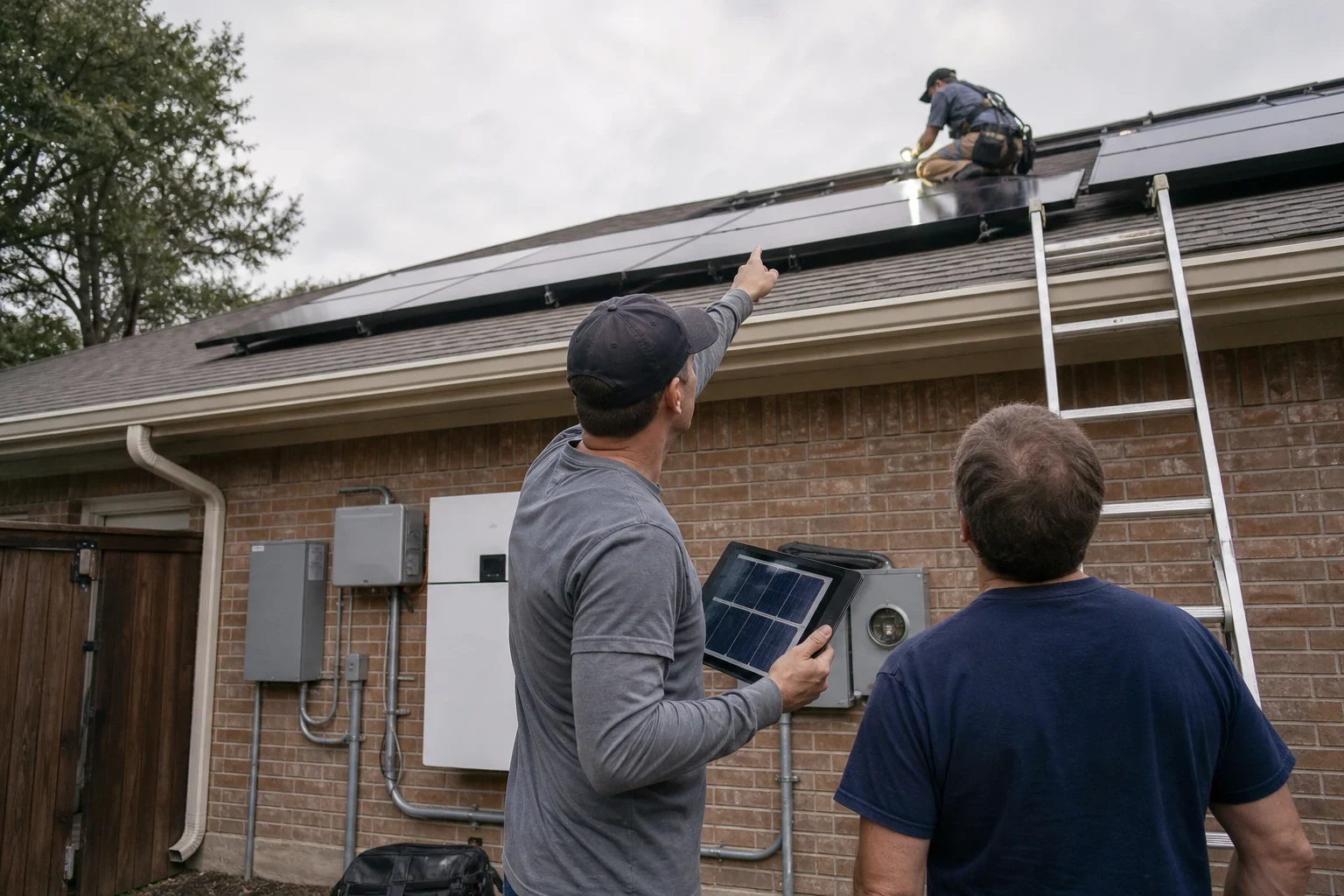
We get on the roof, into the attic and at your electrical panel. Then we lay out a design and a written estimate that lists every part of the job.
- 3
Permits and scheduling
We file the permits and utility paperwork. Once approvals come back, we set an install date that works for you.
- 4
Install day
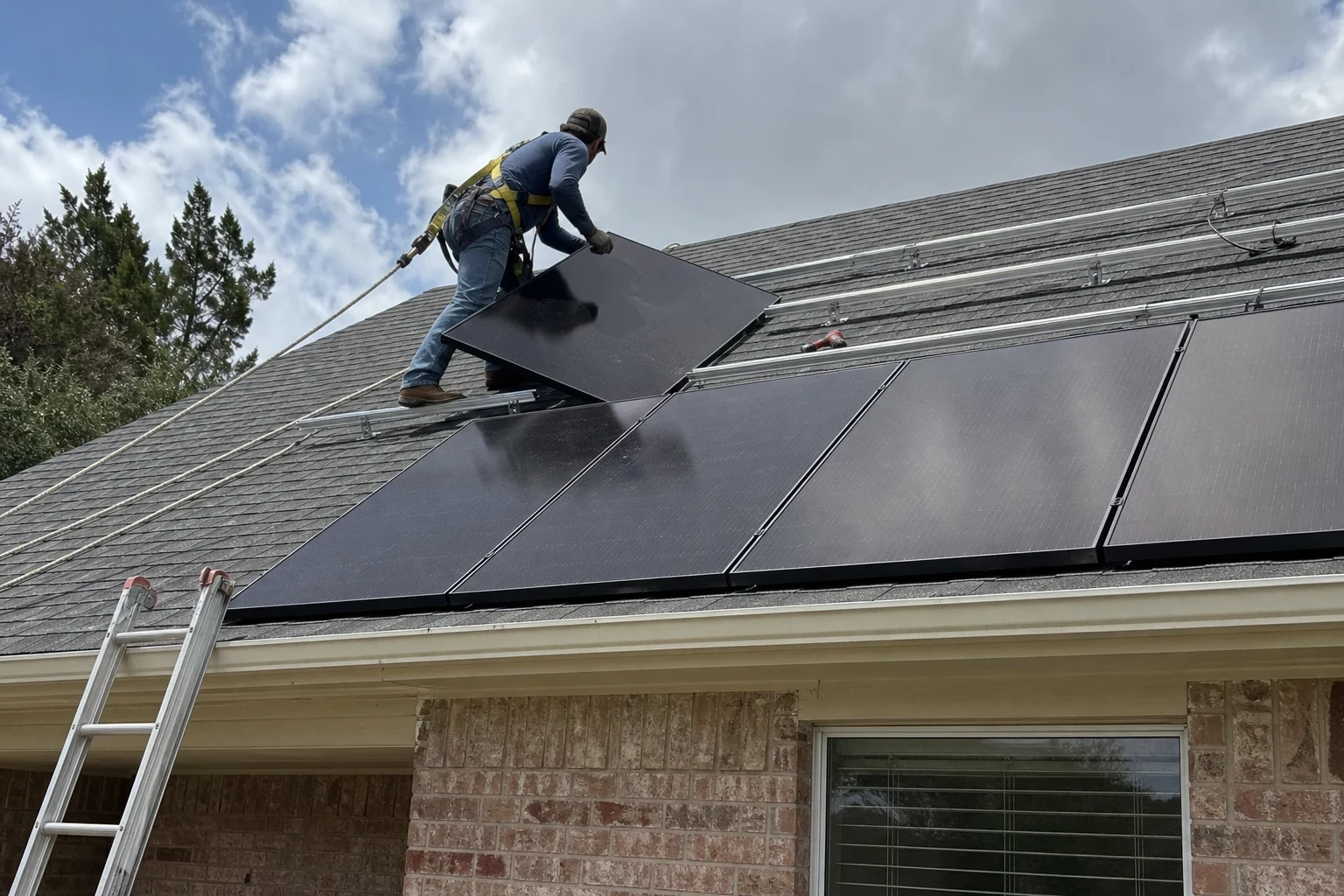
Our crew uses fall protection on the roof and sets up a clear zone below so kids and pets stay out of the work area. Power is shut off at the panel before any connection is made. Before the crew packs up, a rolling magnet goes over the grass and pavement so no loose fasteners end up in a tire or a bare foot.
- 5
Inspection and switch-on
After the city inspection passes, the utility gives permission to operate. We turn the system on with you and confirm it is producing.
Common Questions About Installing Solar Panels
Could panels make my roof leak?
Not with mounts installed correctly. Every attachment is fastened into a rafter, sealed and covered with flashing that steers water around it. We inspect the roof first so we never mount on top of existing damage.
How long is the crew at my house?
Most home systems take one to two days on site. Permits, inspection and utility approval take longer, and we manage those and keep you posted.
Should I be home on installation day?
We'd like someone there at the beginning and end of the day so we can go over the plan and show you the finished work. We'll also need to get to your electrical panel and attic.
Will solar keep my power on when the grid is down?
A typical grid-tied system turns itself off during a grid outage, which keeps utility crews safe while they fix the lines. To have power in an outage, you need battery storage, which we can add now or plan for later.
Can panels handle hail?
Panels are designed and tested to withstand hail, and most make it through storms without trouble. If one cracks, our solar repair service can check the array and safely swap out damaged modules.
Do I need HOA approval for solar?
Most HOAs ask to review plans before installation. Texas law generally prevents them from banning solar outright, although certain placement rules may apply. We supply the layout drawings and equipment details your HOA requests and can go over placement questions with you by phone.
Ready to See What Solar Looks Like on Your Roof
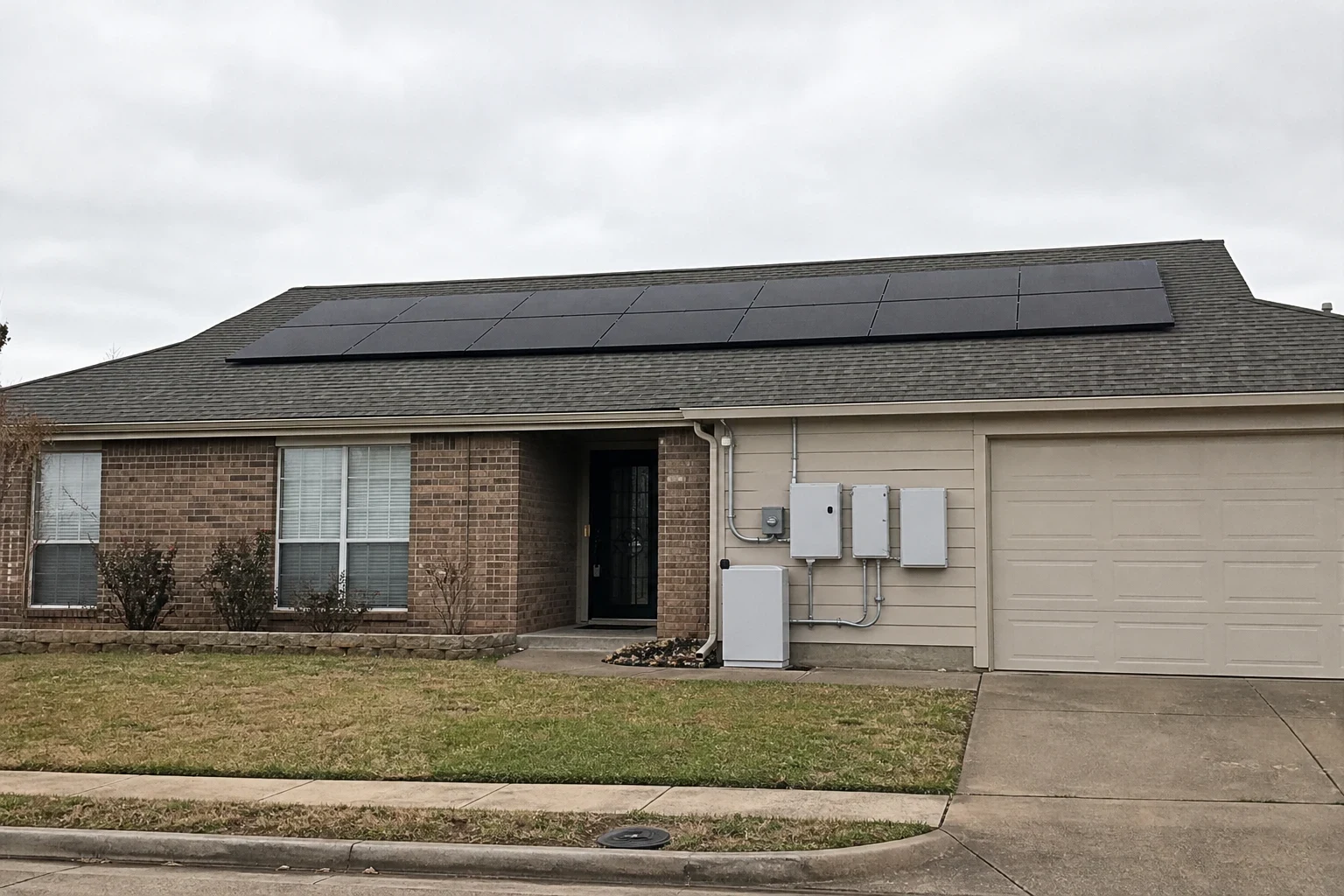
Tell us a little about your home and your power bills, and we will set up a visit to look at your roof and electrical panel. You will get a clear, itemized estimate and straight answers.